

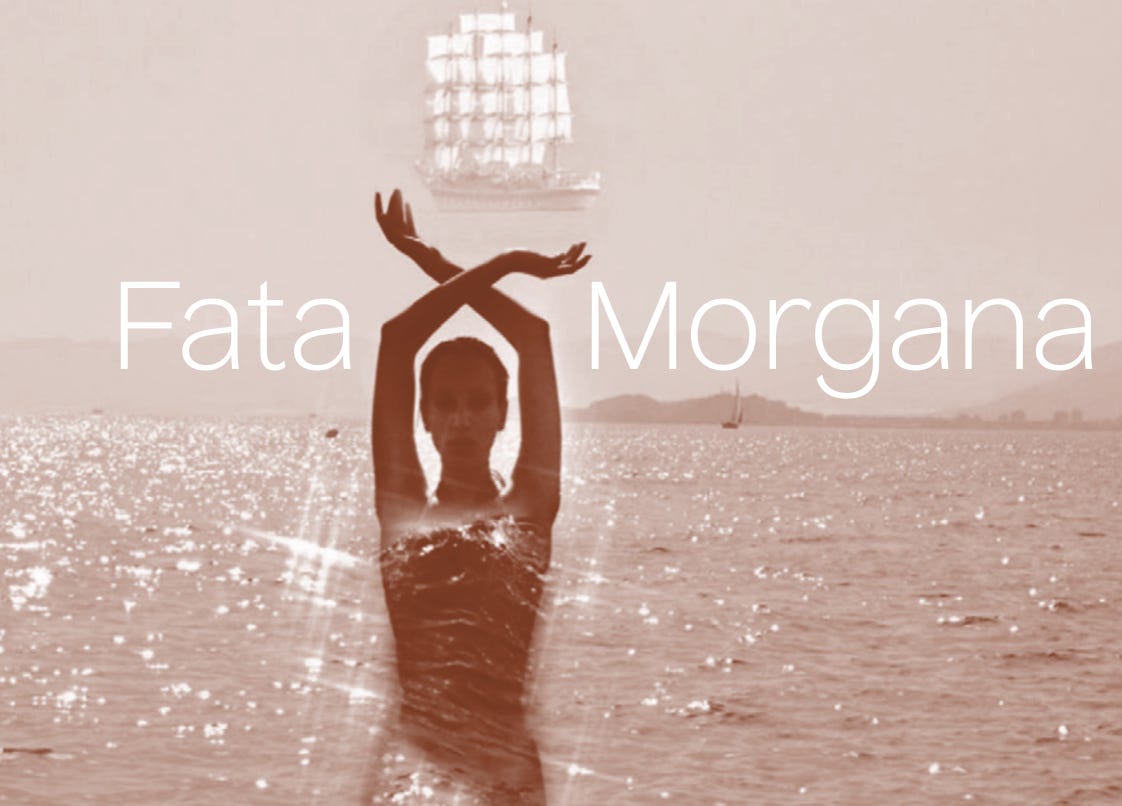
Fata Morgana
In our era of meta-illusion, defining one’s principles and purpose is the best way to avoid getting lost in a hyperreal hall of mirrors. Knowing who we are affects how we perceive the world.

The mysterious email was also cause for consternation.
“I’m writing to you because I need your help,” the unknown sender pleaded. “I can’t tell you much because I’m in the dark, too. I can tell you my name is Blanca. And I am no longer free.”
Cryptically, the woman claiming to be Blanca, continued:
“There may be a chance to save me. But to know whether you’re up to the task, first I need to know who you are.”
Sent back in 2019, in a world that no longer exists, this semi-anonymous message was actually an invitation. Only partially real – whatever that means – sowing the seeds of doubt was part of a carefully scripted immersive story to foreshadow a ColourFeel team building trip that I had designed for a tech company. Three days of thought-provoking talks, experiences, and performances themed around the idea of authenticity on the edge of the Bardenas Reales desert in Northern Spain. The idea was to help them navigate our age of intensifying virtual illusion.
I’d fallen down several rabbit holes myself. My first encounter with Blanca had been during the preparation trip, where I’d met several locals who spoke of a medieval princess imprisoned in a remote stone tower by the King simply for refusing an arranged marriage. Each re-telling of local lore was punctuated by a curiously recursive dismissal, with everyone muttering a version of “who knows if the story is true or not…”

I wondered about the stories we tell ourselves, how volumes of fiction fold into the foundations of every day. Author and activist Toni Cade Bambara surmised society’s maze of narratives with her pointed question: “what are we pretending not to know today?” We tend to avoid inconvenient truths, because embracing more picture-perfect versions of reality proffers comfort and reward. The stimulation of the simulation.
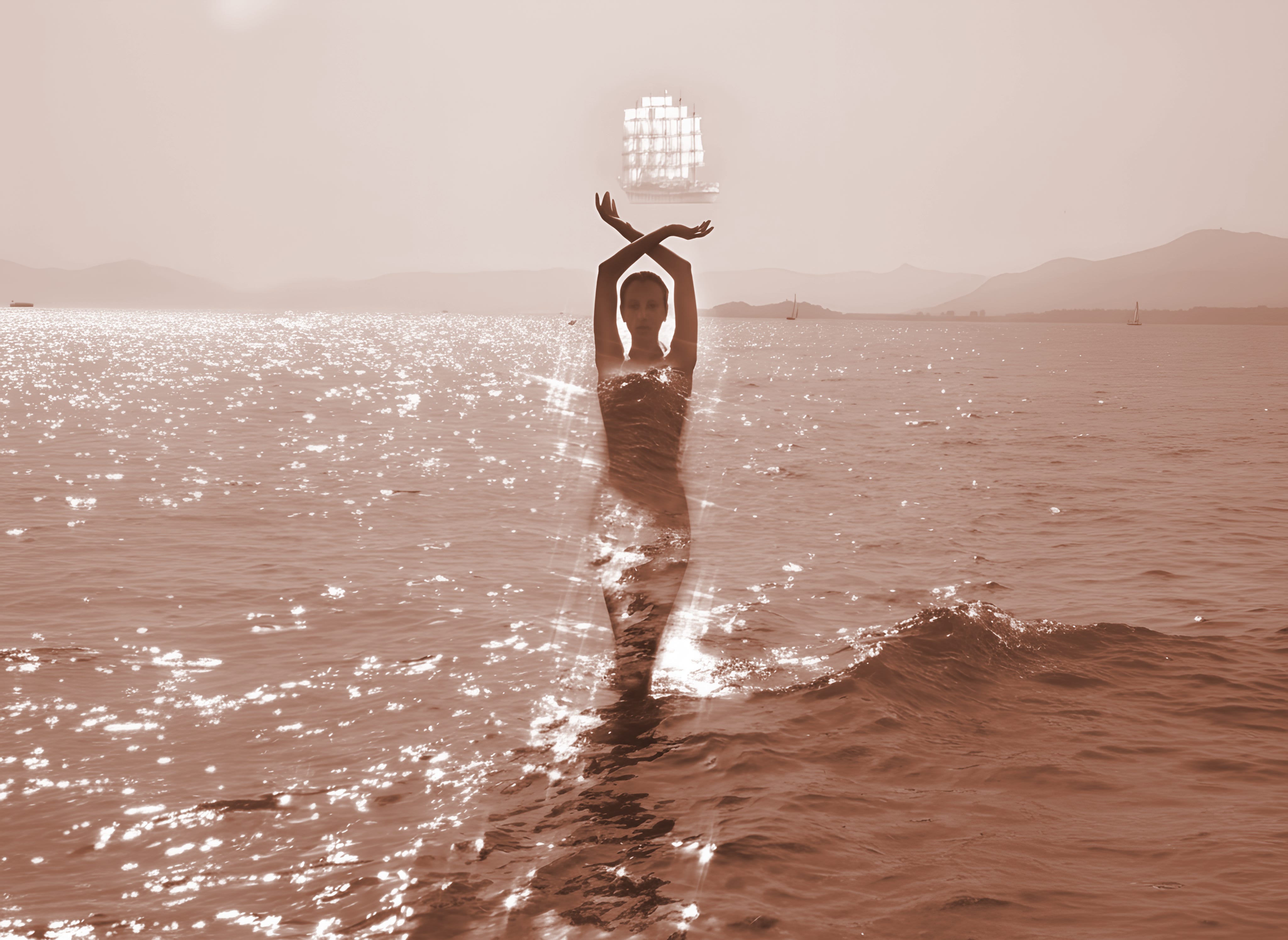
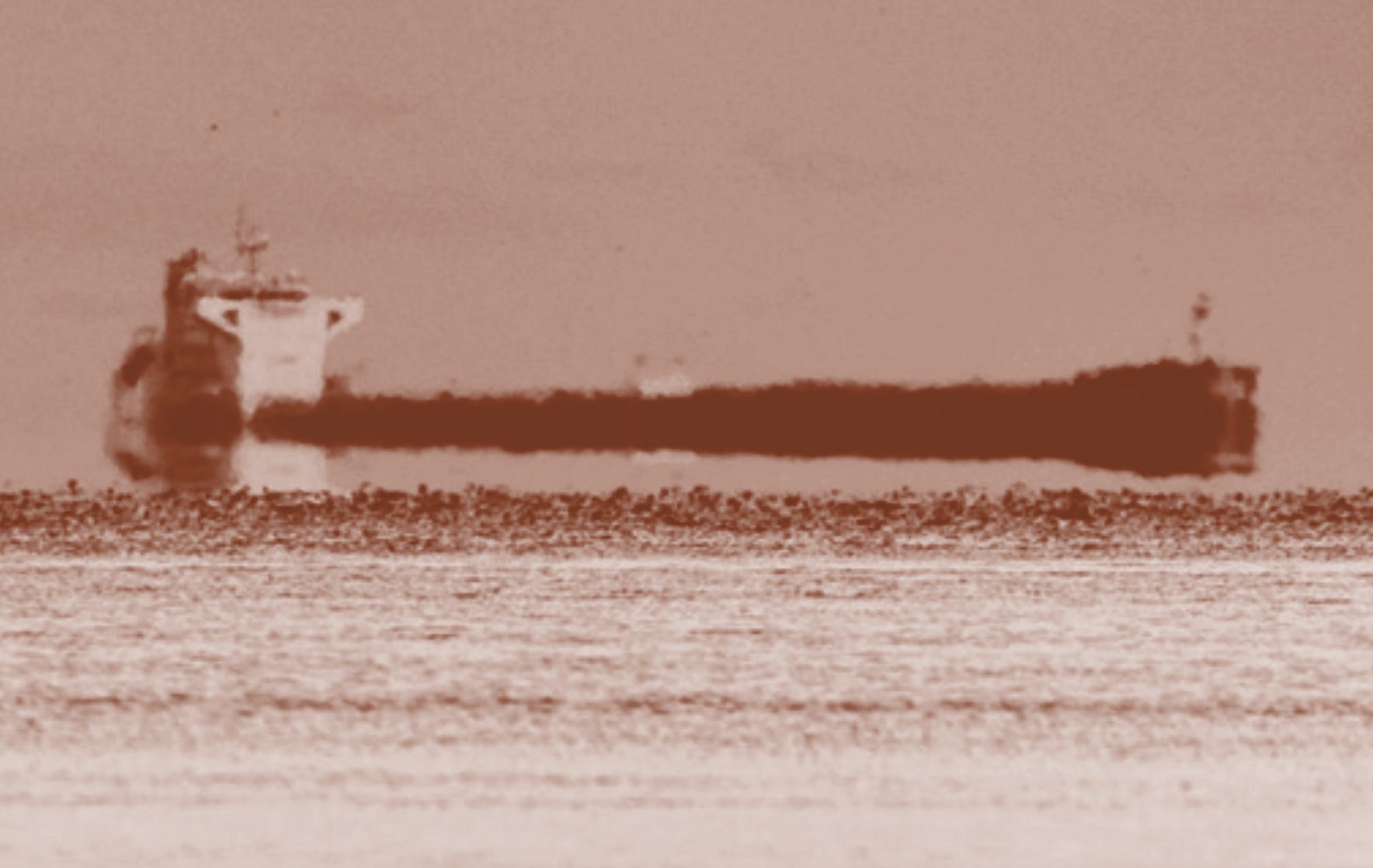
Tales of floating cities and ships soaring through the sky have entertained humanity for millennia. Bewildered seamen called these strange apparitions ‘Fata Morgana’ after the infamous enchantress Morgan Le Fay. These optical illusions have since been explained through the science of refraction – the bending of light – occurring when disparate temperatures allow objects beyond the horizon to be projected above it. The experience of these ‘superior mirages’ is our optic nerve glitching in real-time. Unable to reconcile the way light travels through space, our brain ends up processing the information into fanciful spectacles that float through the sky.
Seeing might still mean believing but our brain’s default mode network tricks us every day, sifting out predictably familiar information in order to spot anything foreign or potentially hazardous.
Today, instead of the sky, the modern-day mirror world is projected across infinite screens. This retouched reality sees face-filters blur into fully rendered AI characters where everything and everyone is trying to be the bigger, better, and more beautiful illusion. For many, a messy world turns this carousel of make-believe into an alluring escape hatch. The horizon in our hands, today Fata Morgana appears almost everywhere.
Which brings us back to Blanca. I’d resuscitated her plight for the virtual age, riffing off early Internet scams where faux Nigerian princes would sneak into people’s inboxes and phish for help in transferring fake sums of money. Predictably, the recipients of my more benevolent princess’ cry for help instantly marked it as spam.
Around the tech company’s office, word soon spread that there was more to Blanca than met the eye and more emailed questions guided them to start telling stories of their own:
>> Tell me why you think you are enough;
>> Do you see mistakes as failures?
>> Where are you going?

Upon arrival at the desert hotel several weeks later, anticipation about meeting Blanca was feverish. Re-telling the legend of Blanca de Navarra, I hinted we might get a chance to meet her while still honouring the local tradition of casually dismissing her existence.
The premise for our trip to the desert was timely. In a world awash with simulacra, nonsense narratives, and eroding trust, all we can really do is get to know our ourselves. Because ultimately, we only see things through the lens of who we are.
The next afternoon, a series of envelopes landed on the group’s sun-beds as they lounged by the pool.
“Me again (remember me?). I still need saving – and the time has come. Gather your things and meet at the vehicle convoy in 20 minutes. Our moment of truth has arrived – Yours truly, Blanca.”
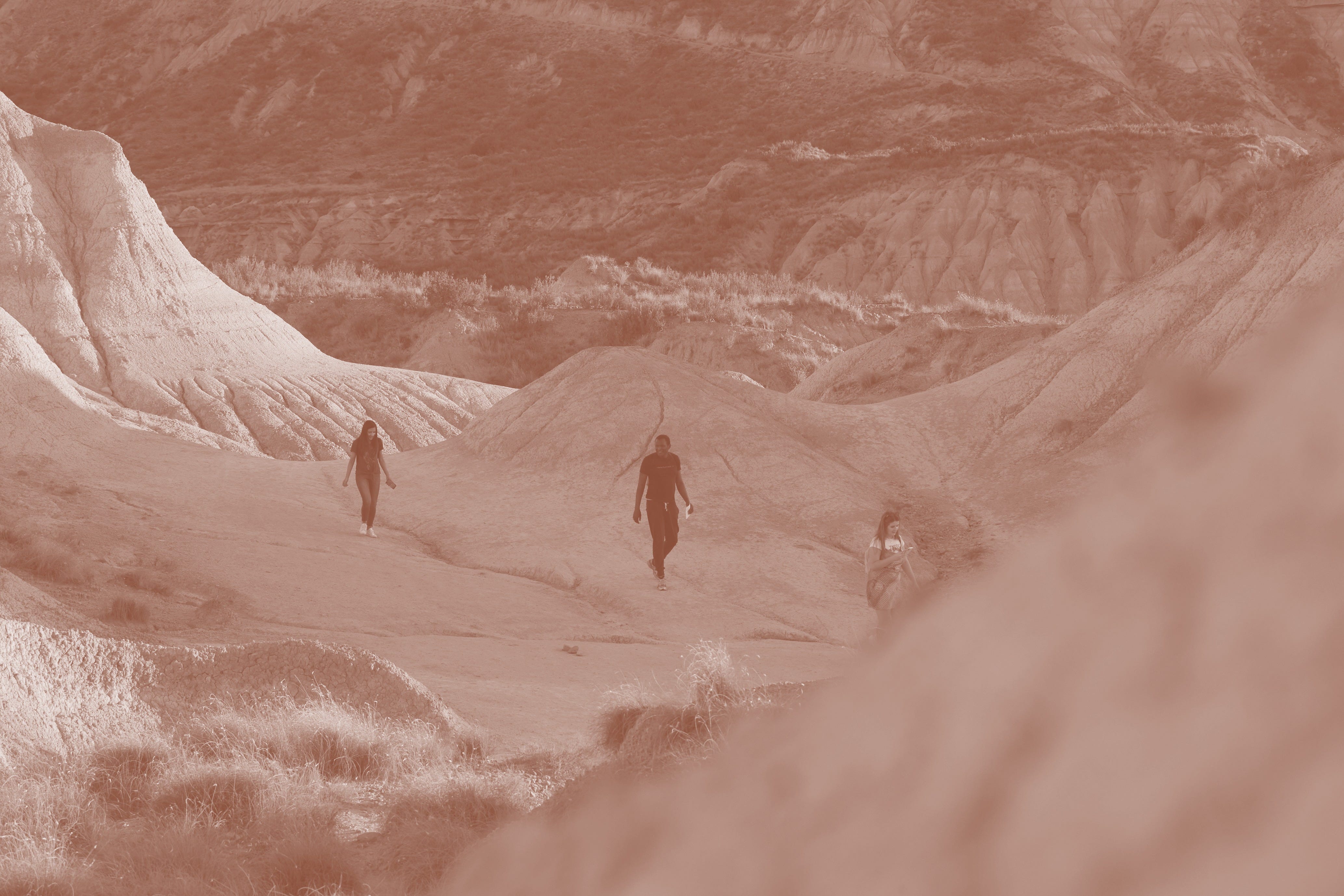
Almost like a choose-your-own-adventure rendition of immersive theatre, I’d peppered a 3-kilometre trail with questions cards then staggered small groups along the path. Reading like a script, the questions prompted conversations about different phases of participants’ lives.
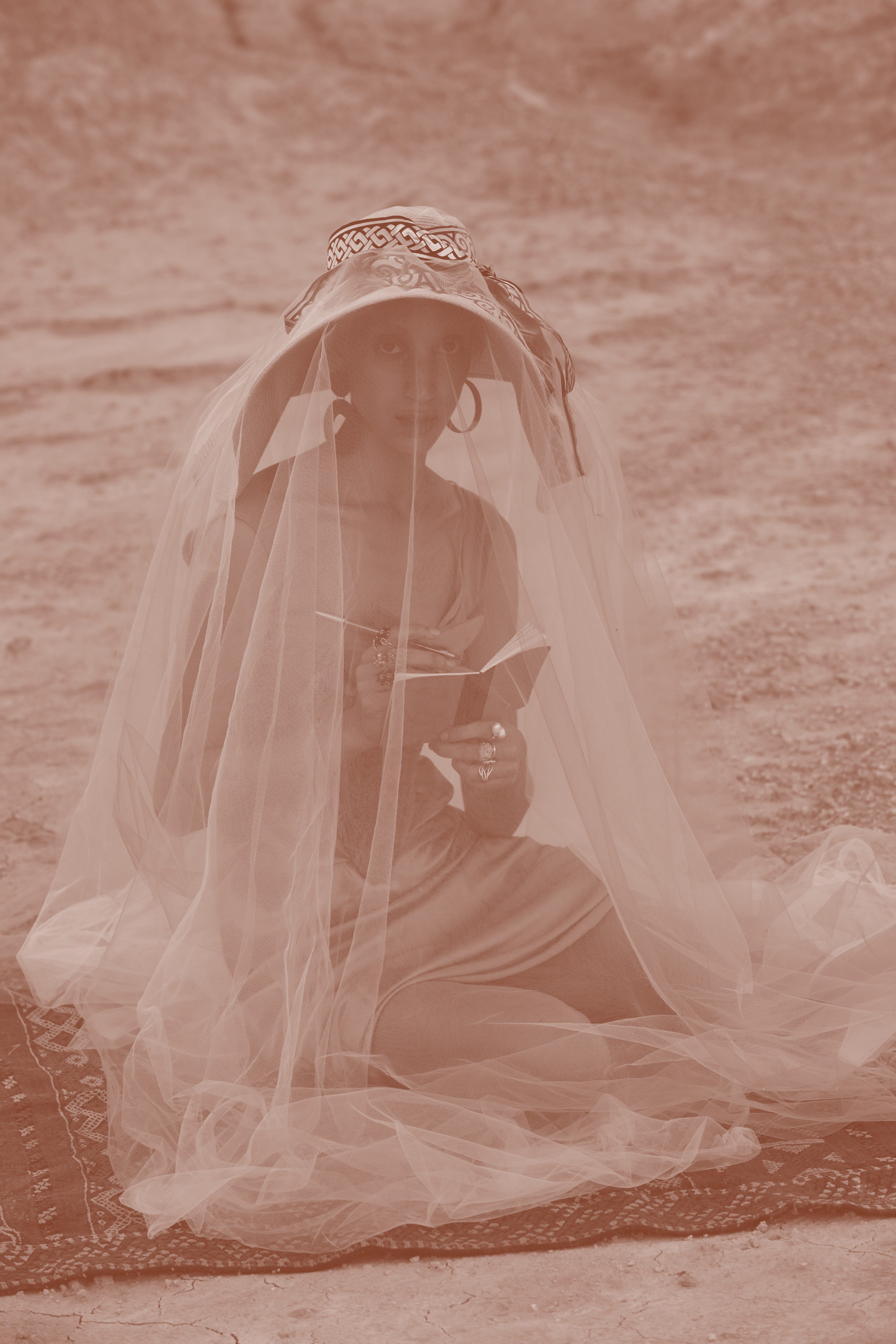
Waiting for them at the end, atop an opulent carpet and shrouded under a translucent veil, sat Blanca. Embodied by enigmatic Spanish-Amazigh performance artist Cuentos Rosales, Blanca invited them to sit one by one, handed over a mirror, then asked them to stare at themselves and reflect on their life legacy. Like meeting their semi-fictional maker, this surreal conversation forced them to meet their own reflection. “What is your existential contribution?” she asked them. “I need to know who you are.”
In recent years, these questions have reverberated with sharper urgency. The overlap between IRL and URL worlds has become a hyperreal hall of mirrors where every spectacle flirts for our attention, dances with our desires, forcing us all to grapple with a multiverse of mystification.
This new reality brings me to the isle of Ibiza. Floating in its own sparkling sea of mass projection, Ibiza continues to attract multitudes of wish-casting wanderers to her shores, all looking for a hint of truth, most often just a thinly veiled search for themselves.
An isle of idealisation layered onto a tangible iteration of paradise, entire industries have been built around sustaining the idea of Ibiza; outer quests that are sated through a hedonistic playground of earthly delights. But much like the Fata Morgana, or Blanca, and all the other infinite irrealities that dance around us, our view of the world is still calibrated by the inexplicable forces flowing within.
Ibiza, so the mythology goes, just holds up the mirror.
*This article first appeared in the sixth edition of Xarraca Journal. The print version is available to buy at AGORA at SIX SENSES IBIZA.
Did ‘Fata Morgana’ awaken your imagination?
This summer ColourFeel’s cultural festival Another Future will be diving into similar themes and illusions to help people navigate our world of dreams, dramas, and distractions.
Our first event is on May 28 at Soho Farmhouse in Ibiza with more dates to follow in June, July and August.
Click the link below to read more.
And hope to see you in “the real world” very soon.